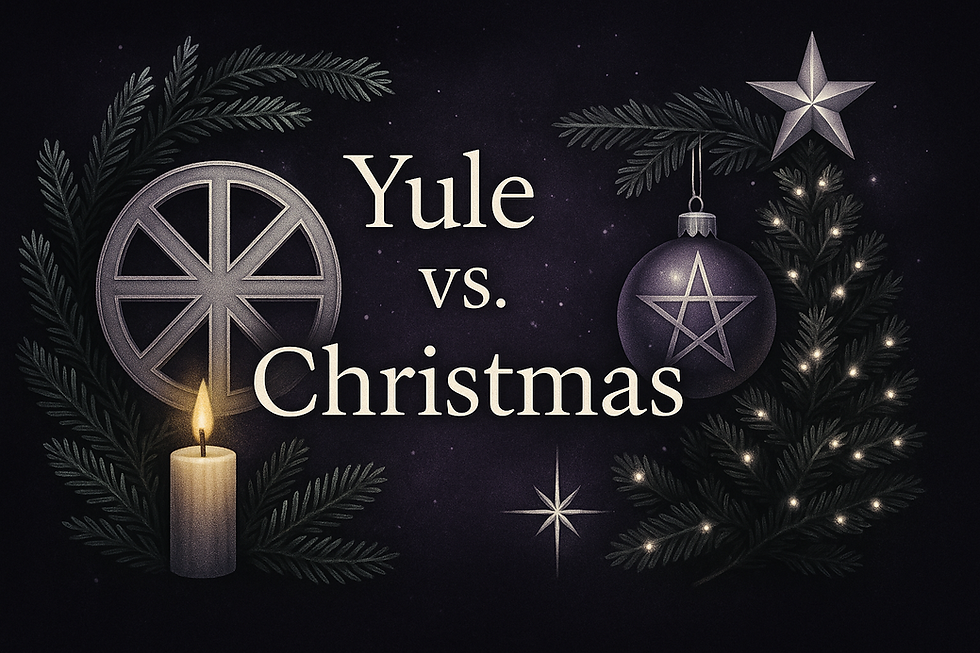
Yule vs. Christmas: Similar Roots, Different Paths

Pagan Pathways - T.L. Duncan
Every December, conversations inevitably drift toward holiday traditions — who celebrates what, and why. For many modern Pagans, especially those walking witchcraft or folk-magic paths, the question comes up again and again: What’s the real difference between Yule and Christmas? And the short answer is simple: they aren’t enemies, but they aren’t the same thing either. Their histories overlap, but their intentions do not.
Yule is one of the oldest winter celebrations on record — an ancient Midwinter festival honoring the returning light, the strength of the natural world, and the quiet magic found in darkness. It’s the longest night of the year, the true turning of the Wheel, and a moment for reflection, renewal, and intention-setting. Evergreen boughs, candles in windows, burning the Yule log, feasting after scarcity — these are all rooted in seasonal, earth-based observances that long predate Christianity.
Christmas, on the other hand, is a religious holiday centered around the birth of Christ — but it didn’t always look the way it does today. Much of what we now label as “Christmas tradition” — trees, gift-giving, mistletoe, holly, feasting, carols, even the timing of the date — were adopted, adapted, or outright borrowed from older pagan Midwinter rites. Christianity grew, cultures blended, and eventually the two celebrations became culturally intertwined in ways that still confuse people today.
So what separates them now?Intention.Yule is nature-based, cyclical, and magical. Christmas is devotional, Christ-centered, and shaped by church tradition. They may share aesthetic overlap — twinkle lights and evergreens don’t belong to only one path — but they are not interchangeable.
And here’s the truth most of us already know in our bones: you can celebrate one, the other, or both, without betraying your path. Many modern witches grew up with Christmas and still honor aspects of it for family, nostalgia, or cultural reasons. Others shift fully into Yule, honoring the season in a way that feels aligned with their craft. There’s no wrong answer. The wheel turns for everyone, after all.
What matters is choosing intentionally — deciding what traditions you keep, which ones you release, and how you want your Midwinter season to feel.
Whether you call it Yule, Christmas, or both, may the returning light find you warm, grounded, and ready for whatever the new year brings.


Comments